
15 Words to Learn Before Taking Up Sewing
Starting a new hobby can feel a little daunting. As with anything new, there is so much to learn! This is no different in the world of sewing: from learning to use a sewing machine to understanding all the jargon that comes with the territory.
Here are 15 commonly used sewing terms for any new sewist seeking a head start in the sewing room. These terms will help any beginner navigate the basics of sewing and understand patterns and their instructions.
Bobbin

A bobbin is a small, round disk used in sewing machines to hold the lower thread. Modern bobbins are usually plastic, but some sewing machines still use metal bobbins. Place the bobbin in the bobbin case beneath the sewing machine’s needle.
Bobbin thread will show on the underside of your sewing, so choose a color of thread that will match the back or bottom of your project. For most seams, it’s best to use the same thread in the bobbin and in the needle. Fewer tension adjustments will be needed. During the sewing process, thread from the bobbin thread is interlocked with the upper thread from the needle to form stitches.
Backstitching

Backstitching is a sewing technique used to create a secure seam by stitching backward and forward at the beginning and end of a seam. Most sewing machines have a backstitch button that must be held down while you sew backward for a few stitches. Then, let go of the backstitching button and sew forward again along the same line. The overlapping stitches anchor the beginning and end of the seam and prevent the stitches from unraveling.
Seam Allowance

Seam allowance refers to the area between the stitched seam line and the raw edge of the fabric. The amount of seam allowance can vary depending on the pattern or project specifications. Refer to your pattern to ensure that you are using the correct seam allowance.
Hem
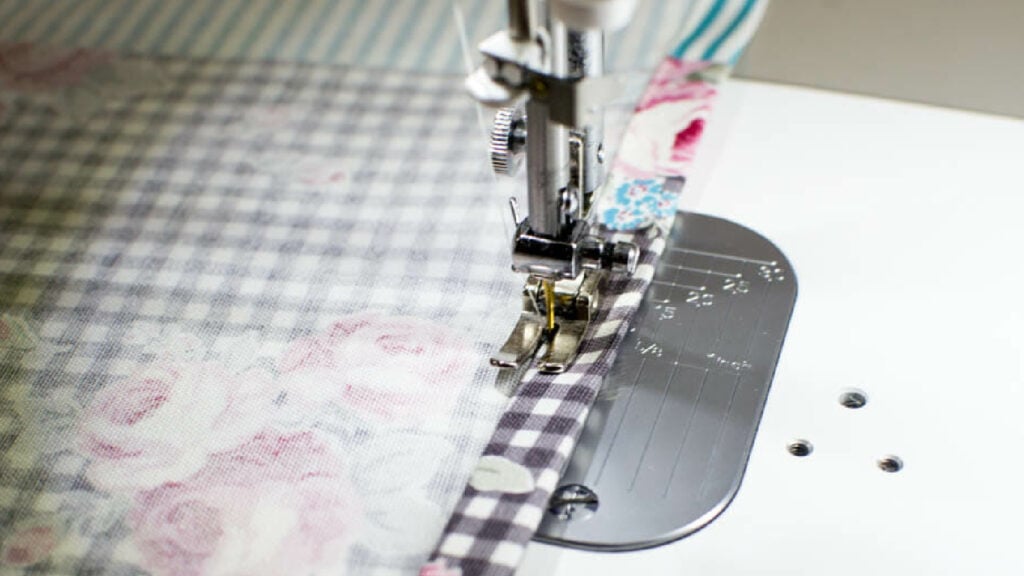
One of the more familiar terms is a hem – many will already know this. This refers to the finished edge of a garment, which has been folded and sewn to prevent fraying.
Pinking Shears

Pinking shears are scissors with a serrated edge. When used to cut fabric, they can prevent fraying and cut notches into seams.
Presser Foot

‘Presser foot’ refers to the attachment on a sewing machine that holds the fabric in place while sewing. This metal or plastic attachment is located at the base of the sewing machine’s needle and is designed to press the fabric against the machine’s feed dogs.
Notions

The word ‘notions’ refers to the various small items and accessories that are used to complete a sewing project. These items are essential for both hand sewing and machine sewing and include ribbons, buttons, snaps, and other decorative elements.
Selvage

Selvage refers to the ‘self-finished’ edge of a fabric. The selvage is created during the manufacturing process as the edges of the fabric are finished to prevent it from unraveling.
Basting

Basting is simply the temporary, rough stitching used to hold fabric layers together before permanently sewing them in place. It is very helpful where pins cannot be used or are not convenient.
Bias Tape

Bias tape is a versatile sewing notion that consists of fabric strips cut on the bias at a 45-degree angle, which is the diagonal direction of the fabric. This type of tape is typically used in sewing to finish or bind raw edges, providing both a functional and decorative element to garments, quilts, and other fabric projects.
Dart

A dart is a folded and stitched tapered seam used to shape fabric and provide a three-dimensional contour to a garment. Darts are common in blouses, dresses, and bags.
Topstitching

Topstitching in sewing refers to the decorative or functional stitching done on the right side of a fabric, typically visible on the garment’s exterior. This stitching is done parallel to a seam, edge, or other features and is often used to secure layers of fabric, reinforce seams, or add a decorative element to the finished piece.
Gathering

A technique to create controlled folds in fabric for a decorative or fitting purpose.
Serging

Serging refers to the process of using a serger or overlock machine to finish the raw edges of a fabric, thus preventing fraying.
Pattern

Sewing a new garment isn’t as simple as taking a few pieces of fabric and sewing them together. The fabric needs to be cut according to certain measurements to ensure optimal results. That’s where a sewing pattern comes in, with a template or guide used to cut fabric pieces for sewing a garment or project.
More From SewCanShe


15 Art & Crafts That Can Make Serious Money

15 Transferable Skills That You Never Thought Sewing Could Teach You

Disclosure: some of my posts contain affiliate links. If you purchase something through one of those links I may receive a small commission, so thank you for supporting SewCanShe when you shop! All of the opinions are my own and I only suggest products that I actually use. 🙂